A gas stove is one of the most important appliances in every kitchen. We depend on it daily for cooking, so even a small issue can disturb our routine. When the flame becomes low, the ignition stops working, or the burner heats unevenly, the first question that comes to mind is: “How do I fix my gas stove at home?”
This blog will help you understand the most common gas stove problems, how to check them, which issues you can safely fix at home, and when it is necessary to call a professional technician.
Common Gas Stove Issues Most People Face
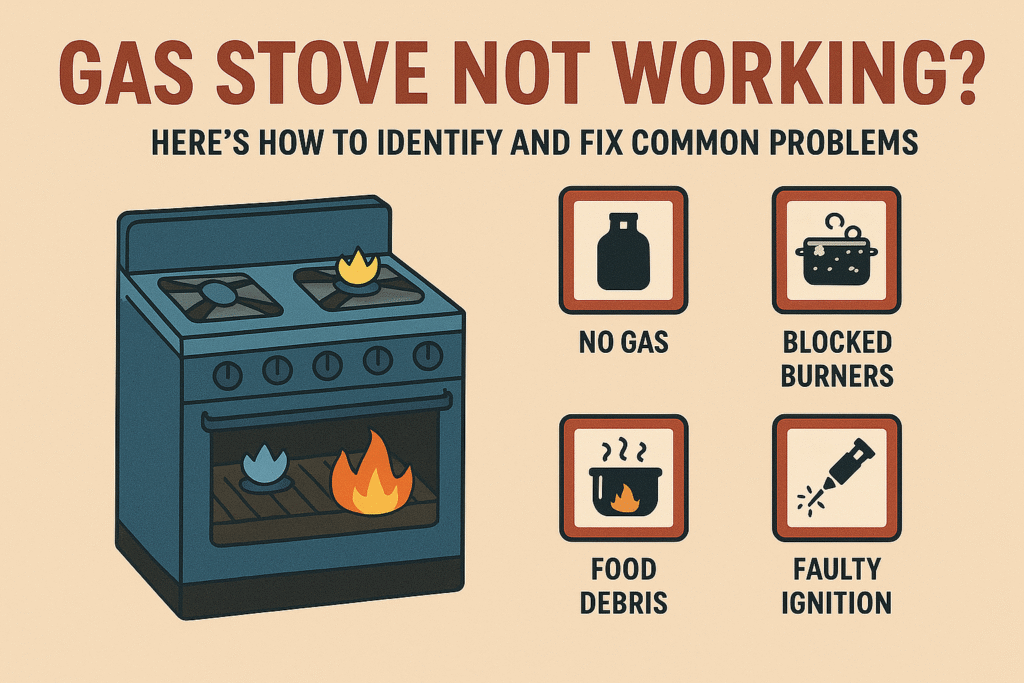
Most gas stove problems happen because of:
- Dirt and blockage
- Ignition issues
- Gas pressure problems
Below are the most common problems:
1. Low Flame
This happens when the burner holes get clogged with oil, food particles, or dust. The blockage slows the gas flow.
2. Ignition Not Working
This could be due to a weak spark plug, dead battery (in auto-ignition stoves), or loose wiring.
3. Yellow Flame Instead of Blue
A yellow flame means the stove is not getting enough oxygen. This usually happens because of a dirty burner or poor air–gas mixing.
4. Gas Leakage Smell
This is the most dangerous issue. The rubber pipe, regulator, or internal valve may be damaged.
5. Clicking Sound from Ignition
Continuous clicking indicates moisture, carbon buildup, or an electrical short.
How to Fix Gas Stove at Home (Simple Steps)
These steps are safe for everyday users.
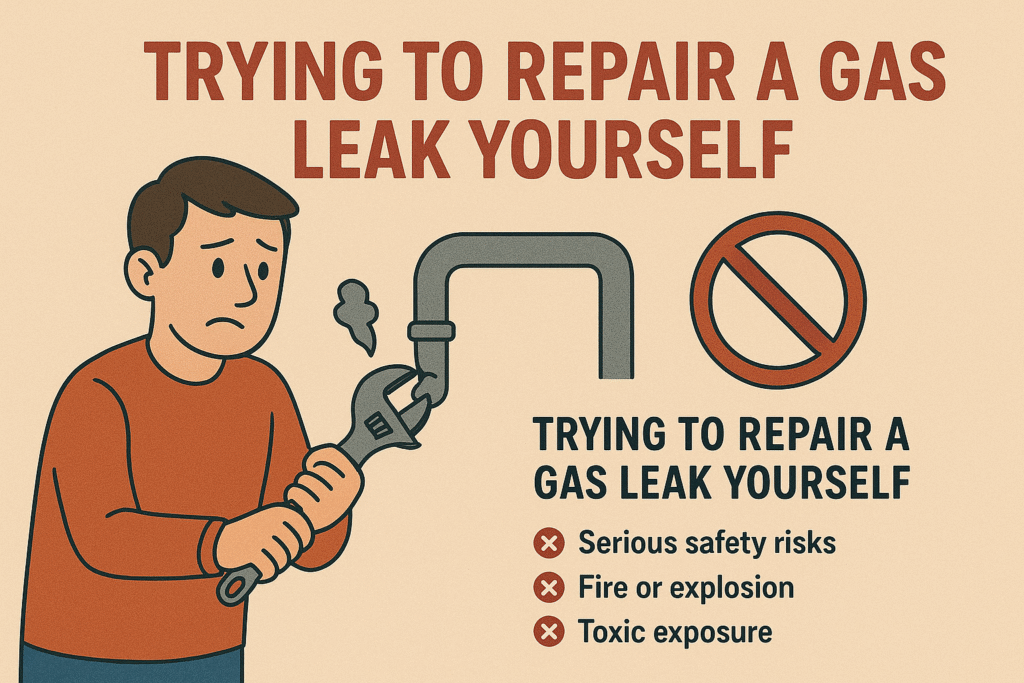
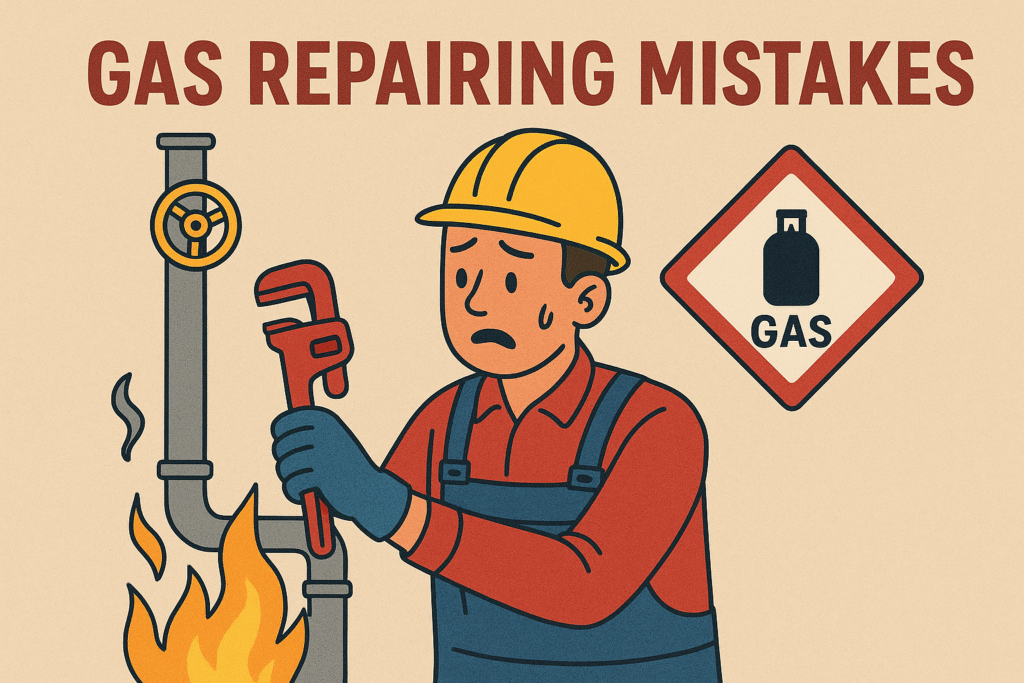
If you smell gas, see overheating, or notice major damage — do not try to repair it yourself.
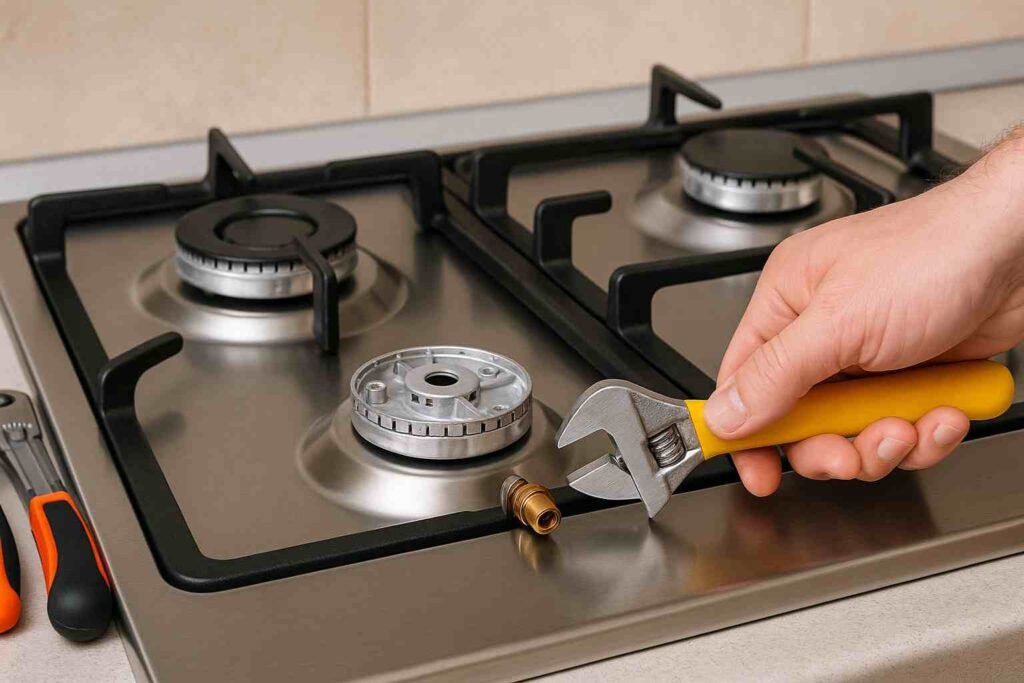
1. Clean the Burner
- Turn off the gas supply
- Remove the burner top
- Soak it in warm soapy water for 15–20 minutes
- Scrub with a soft brush
- Clean clogged pinholes using a toothpick (gently)
2. Check the Gas Pipe
- Look for cracks, bends, or damage
- Ensure the regulator is tight
- Replace old or hardened pipes immediately
3. Replace the Ignition Battery
In auto-ignition stoves, a small AA battery under the stove controls the spark.
If ignition is weak or dead, replacing the battery usually fixes it.
4. Remove Moisture
If the stove top or burner area gets wet, the ignition may not work.
Dry the burner and the spark area with a cloth.
5. Check Burner Alignment
Misaligned burners can cause uneven heat or yellow flame.
Ensure the burner is properly seated in its slot.
Safety Tips When Fixing a Gas Stove at Home
Never ignore safety when dealing with gas appliances.
- Turn off the regulator before doing any check
- Replace the rubber pipe every 1–2 years
- Avoid open flames near the stove while repairing
- Keep the area around the stove dry
- If you smell gas, do not switch on electrical appliances or ignite anything
When You Should Call a Professional Gas Technician
Some issues should not be handled at home, as they require tools and experience.
Call a professional if you notice:
- Strong gas smell
- Yellow flame continuing for long
- Ignition spark completely dead
- Regulator making hissing sounds
- Fire backflow or sudden high flame
- Heavy carbon buildup
- Loose or damaged gas pipes
A professional will use tools like leak detectors, pressure meters, and proper equipment to ensure safety.
Importance of Regular Gas Stove Servicing
Regular servicing helps in:
- Improving gas efficiency
- Preventing kitchen accidents
- Avoiding sudden breakdowns
- Improving flame quality
- Extending the stove’s lifespan
- Reducing long-term repair costs
Final Words
Fixing a gas stove at home is not difficult if the issue is small and easy to handle. Regular cleaning, proper maintenance, and checking basic parts can solve most problems.
But for gas smell, overheating, ignition failure, or regulator issues — always call a professional.
A well-maintained gas stove keeps your kitchen safe, efficient, and hassle-free.