Working on a gas stove or cooktop may look simple, but even a small mistake can lead to gas leaks, fire hazards, or serious injury. In Delhi NCR, where millions of homes use LPG or PNG connections daily, gas safety awareness is more important than ever.
Here are the top 10 common gas repairing mistakes people make at home — and expert tips on how to avoid them.
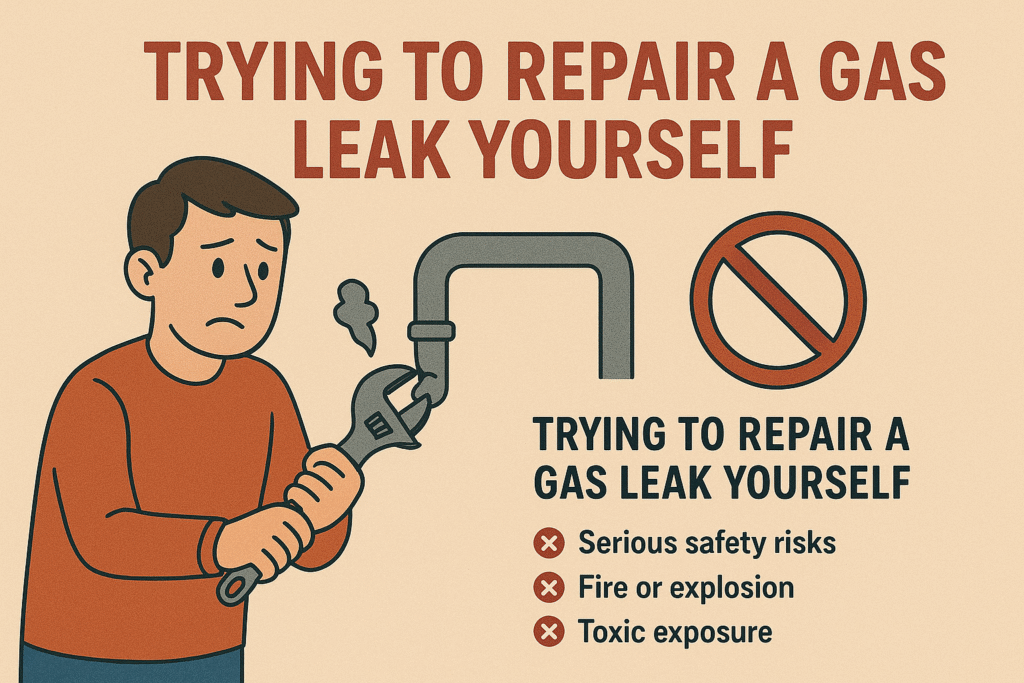
1. Trying to Repair a Gas Leak Yourself
A gas smell is the biggest red flag — and should never be ignored or handled without tools.
Many people try to tighten joints or use tape, which is dangerous.
✅ What to Do Instead:
Turn off the main valve, open windows, avoid flames, and call a certified gas repair technician near you immediately.
Real Fact: According to PESO, 68% of urban gas accidents start from amateur leak repairs.
2. Using Open Flame to Check for Gas Leaks
Lighting a matchstick to detect a leak is one of the most dangerous mistakes.
Flammable gases like LPG or PNG can ignite instantly.
✅ Safe Method:
Mix soap and water, apply it on joints — if bubbles appear, you have a leak.
3. Ignoring Regular Maintenance
Gas stoves accumulate carbon, dust, and grease over time, reducing flame quality.
Skipping maintenance can also cause gas pressure imbalance.
✅ Tip:
Book a professional servicing every 6 months to keep burners clean and efficient.
4. Using Non-ISI Rubber Hoses or Fittings
Cheaper local pipes and regulators may save ₹100–200 but can fail under pressure.
✅ Use Only:
ISI-certified hoses and regulators that meet BIS safety standards.
5. Keeping Cylinder in Closed Space
Placing your gas cylinder inside a closed cabinet or under a shelf restricts airflow.
If a leak occurs, gas accumulates — creating an explosion risk.
✅ Correct Practice:
Keep the cylinder in an open, ventilated space away from electrical sockets.
6. Ignoring the Color of the Flame
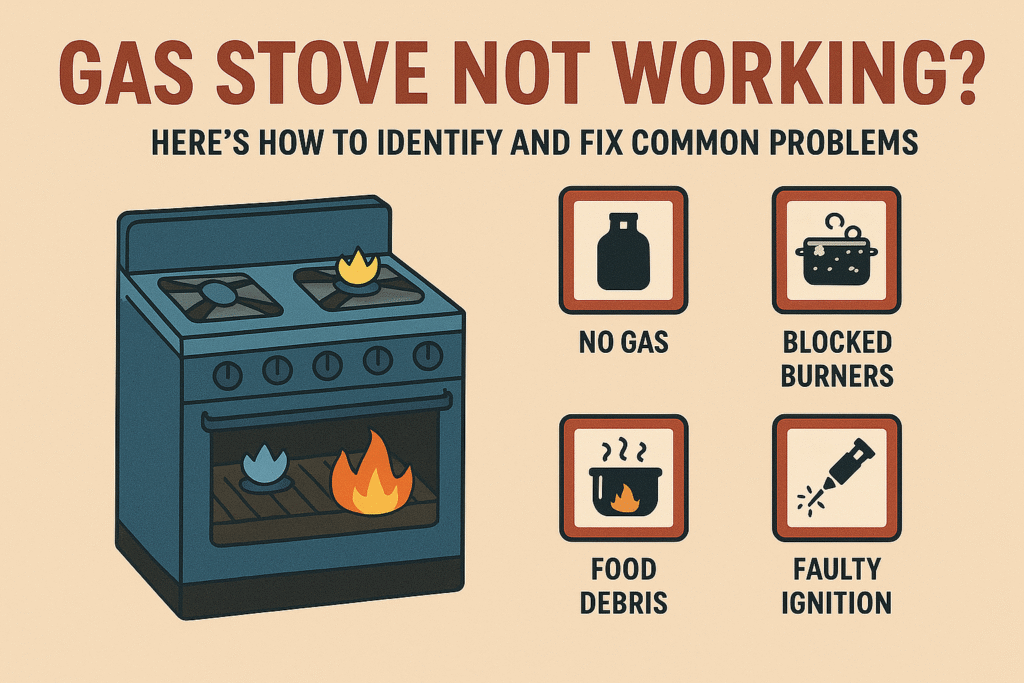
A blue flame means your stove is healthy.
A yellow or orange flame means incomplete combustion and CO (carbon monoxide) risk.
✅ Fix:
Clean burner holes and check for blockage; if it persists, get it inspected by a technician.
7. Washing the Stove with Excess Water
Water can damage the ignition switch and short-circuit internal wiring.
✅ Tip:
Wipe the cooktop with a damp cloth — never pour water directly.
8. DIY Electrical Ignition Repairs
Electric or auto-ignition systems are sensitive and need skilled handling.
Opening them without tools or grounding knowledge can cause shocks.
✅ Tip:
Call a technician — they use insulated screwdrivers and voltage testers to fix ignition safely.
9. Ignoring Gas Pressure Fluctuations
Low or uneven flame could mean pipeline blockage or regulator fault.
Many users ignore it till the stove stops completely.
✅ Fix:
Get the gas line pressure tested using a U-tube manometer — available with professional technicians.
10. Delaying Replacement of Old Equipment
If your stove, hose, or regulator is 5+ years old, don’t wait for an emergency.
Old seals wear out, causing slow leaks.
✅ Tip:
Replace them periodically, especially after any repair.
Why These Mistakes Are Dangerous
Gas is odorless, colorless, and highly flammable — even a small leak can fill a kitchen in minutes.
According to Delhi Fire Department data, every year 300+ minor kitchen fire cases are linked to faulty gas fittings or DIY fixes.
Prevention is always cheaper and safer than repair.
How Easy Gas Repairing Helps Delhi NCR Homes Stay Safe
- Trained & certified technicians
- Leak detection with digital tools
- Same-day home service
- ISI-approved replacement parts
- Post-service safety inspection
🔧 Stay safe, not sorry!
Book your preventive gas inspection today with Easy Gas Repairing, trusted across Delhi NCR.